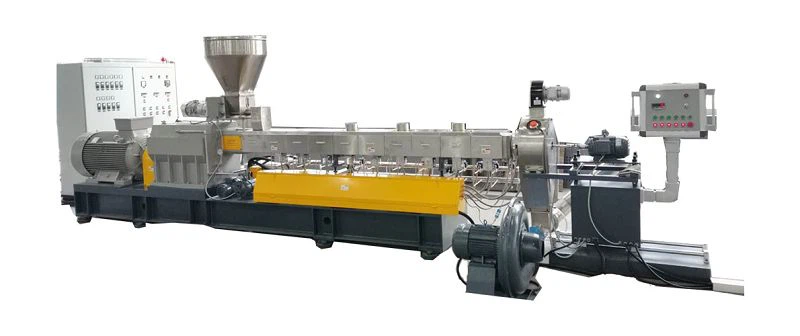
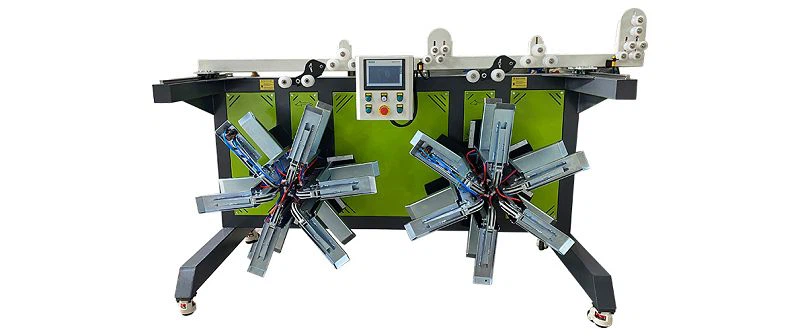
As a supplier of PE Pipe Extrusion Lines, I often get asked about the specific raw materials that can be utilized in these production systems. Understanding the right raw materials is crucial for manufacturers aiming to produce high - quality PE pipes that meet various industry standards and application requirements. In this blog, I will delve into the different types of raw materials suitable for a PE pipe extrusion line.
High - Density Polyethylene (HDPE)
HDPE is one of the most commonly used raw materials in PE pipe extrusion. It is a thermoplastic polymer made from petroleum. HDPE is known for its high density and strong intermolecular forces, which give it excellent mechanical properties.
One of the key advantages of using HDPE in pipe production is its high strength - to - density ratio. This means that HDPE pipes can withstand high pressures without significant deformation. For example, in water supply systems, HDPE pipes can handle the high water pressure required for delivering water over long distances.
HDPE also has excellent chemical resistance. It is resistant to a wide range of chemicals, including acids, alkalis, and salts. This makes it suitable for use in industrial applications where pipes may come into contact with corrosive substances. Moreover, HDPE is highly resistant to environmental stress cracking, which means that pipes made from it have a long service life even when exposed to harsh environmental conditions.
If you are interested in an extrusion line specifically designed for HDPE pipes, you can check out our HDPE Pipe Extrusion Line.
Medium - Density Polyethylene (MDPE)
MDPE offers a balance between the properties of HDPE and Low - Density Polyethylene (LDPE). It has a density range that is lower than HDPE but higher than LDPE.
MDPE pipes are known for their good flexibility and toughness. They can be easily bent and installed without the need for excessive fittings, which reduces installation time and costs. This flexibility also makes MDPE pipes suitable for applications where the pipes need to adapt to ground movement, such as in underground gas distribution systems.
In terms of impact resistance, MDPE performs well. It can withstand minor impacts during handling and installation, which is an important factor in ensuring the integrity of the pipes. Additionally, MDPE has good stress crack resistance, similar to HDPE, which contributes to its long - term durability.
Low - Density Polyethylene (LDPE)
LDPE is a very flexible and soft polymer. It has a lower density compared to HDPE and MDPE, which results in its unique physical properties.
The high flexibility of LDPE makes it ideal for applications where the pipes need to be highly bendable. For example, in some agricultural irrigation systems, LDPE pipes can be easily laid out in irregular patterns around fields. LDPE also has good transparency, which can be an advantage in certain applications where visual inspection of the contents inside the pipe is required.


However, LDPE has lower mechanical strength compared to HDPE and MDPE. It is not suitable for applications that require high - pressure resistance or heavy - duty use. But for low - pressure and light - duty applications, such as some drainage systems or small - scale water transfer, LDPE can be a cost - effective choice.
Linear Low - Density Polyethylene (LLDPE)
LLDPE is a type of polyethylene that has a linear molecular structure with short branches. It combines many of the best properties of LDPE and HDPE.
LLDPE has excellent tensile strength and puncture resistance. These properties make LLDPE pipes suitable for applications where the pipes may be exposed to rough handling or sharp objects. For example, in some construction sites where pipes need to be laid underground in areas with debris, LLDPE pipes can better withstand the potential damage.
LLDPE also offers good flexibility, similar to LDPE, which allows for easy installation. It can be used in a variety of pipe applications, including sewer pipes, where the combination of flexibility and strength is important for withstanding ground movement and potential blockages.
Modified Polyethylene
In addition to the standard types of polyethylene, modified polyethylene can also be used in PE pipe extrusion lines. Modified polyethylene is created by adding various additives or fillers to the base polyethylene resin.
One common type of modification is the addition of antioxidants. Antioxidants help to prevent the polyethylene from degrading when exposed to oxygen and heat during the extrusion process and in subsequent use. This extends the service life of the pipes.
UV stabilizers are another important additive. They protect the pipes from the harmful effects of ultraviolet radiation, which can cause the polyethylene to become brittle and crack over time. Pipes used in outdoor applications, such as in solar water heating systems or outdoor irrigation, greatly benefit from UV - stabilized polyethylene.
Flame retardants can be added to polyethylene to make the pipes fire - resistant. This is crucial for pipes used in buildings or industrial facilities where fire safety is a concern.
When it comes to production lines for these various types of PE pipes, our PE Pipe Extrusion Line and PE Pipe Production Line are designed to handle different raw materials and produce high - quality pipes. Moreover, if you are interested in other types of pipe production, we also offer PVC Pipe Machine Line and Plastic Pipe Production Line.
In conclusion, selecting the right raw materials for a PE pipe extrusion line is a vital decision that depends on the specific requirements of the end - use application. Each type of polyethylene offers different properties, and by understanding these properties, manufacturers can produce pipes that are well - suited for a wide range of industries, from water supply and gas distribution to agriculture and construction.
If you are looking to purchase a PE pipe extrusion line or have any questions about the raw materials used in our production systems, we encourage you to contact us for a detailed discussion. Our team of experts is ready to assist you in finding the most suitable solutions for your production needs.