What are the main components of a WPC Extruder?
Hey there! As a supplier of WPC Extruders, I'm super stoked to break down the main components of these really cool machines with you. Whether you're in the industry or just curious about how WPC products are made, this blog post will give you a good understanding of what makes a WPC Extruder tick.
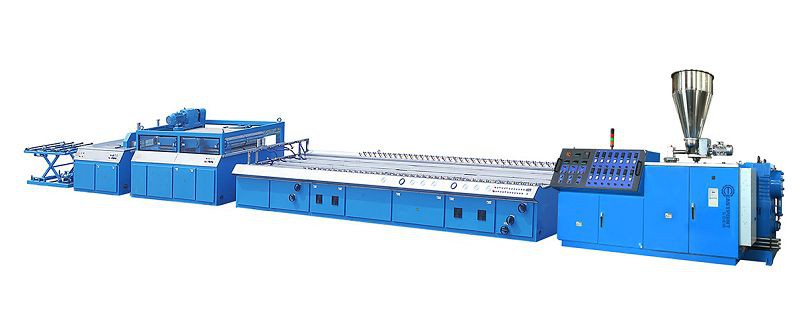
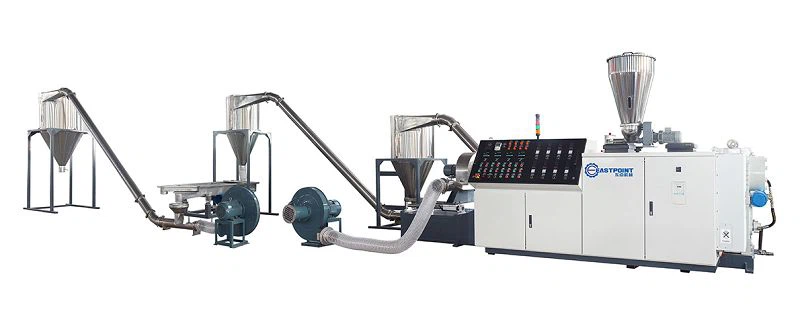
First up, let's talk about the hopper. The hopper is like the "front - door" of the WPC Extruder. It's where all the raw materials go in. For WPC (Wood - Plastic Composite) production, we're usually dealing with a mix of wood fibers and plastic resins. The hopper needs to be big enough to hold a decent amount of these materials, so the extrusion process can run continuously without constant refilling. It's also designed in a way that helps to feed the materials smoothly into the next part of the machine. You can think of it as the starting point of a well - organized production line.
Next, we have the feeding system. This part is responsible for taking the materials from the hopper and delivering them at a consistent rate to the extruder barrel. A good feeding system is crucial because if the material flow is uneven, it can mess up the whole extrusion process. There are different types of feeding systems, like volumetric feeders and gravimetric feeders. Volumetric feeders measure the volume of the materials being fed, while gravimetric feeders measure the weight. Gravimetric feeders are often more accurate, which is great for getting the right mix of wood and plastic in the WPC.
Now, onto the extruder barrel. This is the heart of the WPC Extruder. Inside the barrel, the magic happens. The barrel is heated to a specific temperature to melt the plastic component of the WPC. The heat softens the plastic so that it can blend well with the wood fibers. There are usually multiple heating zones along the barrel, and the temperature in each zone can be controlled independently. This allows for precise control of the melting process. The barrel also has a screw inside it. The screw rotates and pushes the materials forward through the barrel. As it does this, it not only moves the materials but also mixes them thoroughly. The design and geometry of the screw can vary depending on the specific requirements of the WPC production, like the type of plastic and wood fibers being used.
The die is another essential component. After the materials have been melted and mixed in the barrel, they pass through the die. The die is what gives the WPC product its final shape. For example, if you're making WPC decking, the die will be shaped to create the long, flat boards that we're familiar with. There are all sorts of different die shapes available, depending on whether you're making profiles, pipes, or other WPC products. The die needs to be made with high - precision to ensure that the final product has the right dimensions and quality.
Once the material comes out of the die, it enters the cooling system. Cooling is super important because it solidifies the WPC product and helps to maintain its shape. There are different types of cooling systems, such as water baths and air cooling systems. Water baths are often more efficient at cooling, but they need to be carefully controlled to prevent issues like warping or cracking. Air cooling systems are more gentle and can be a good option for some products, especially those that are more sensitive to rapid temperature changes.
After cooling, we have the haul - off system. This system pulls the newly formed WPC product out of the die and through the cooling system at a constant speed. It needs to be synchronized with the extrusion process to ensure that the product is pulled at the right rate. If the haul - off speed is too fast or too slow, it can affect the quality and dimensions of the final product.
Finally, the cutting system is used to cut the continuous WPC product into the desired lengths. This can be a saw or a guillotine - style cutter, depending on the type of product. The cutting system needs to be accurate to ensure that each piece of the WPC product meets the required specifications.


As a WPC Extruder supplier, I can tell you that these components work together like a well - oiled machine to produce high - quality WPC products. If you're interested in other related extrusion lines, we also offer PVC Profile Extrusion Line, WPC Decking Extrusion Line, PP Profile Extrusion Line, and PVC Ceiling Extrusion Line. You can click on these links to learn more about how they work and what they can do.
If you're in the market for a WPC Extruder or any of our other extrusion lines, don't hesitate to reach out. We'd be more than happy to discuss your specific needs and help you find the perfect solution for your production. Whether you're a small - scale manufacturer looking to get started or a large company wanting to upgrade your equipment, we've got you covered.