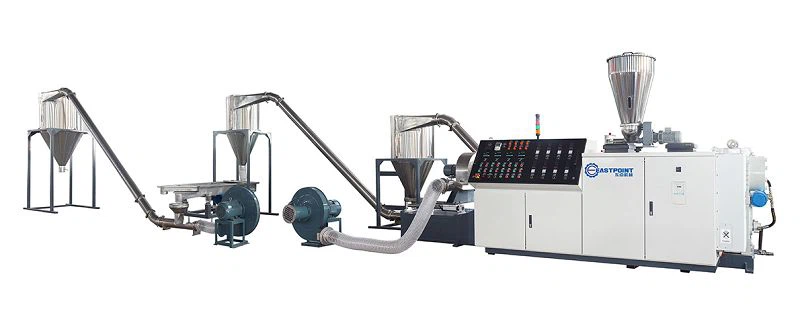
Alright, folks! As a supplier of PVC Pelletizing Lines, I often get asked this question: Can a PVC Pelletizing Line be used in harsh environments? Well, let's dig into this topic and find out.
First off, what do we mean by harsh environments? Harsh environments can vary widely. It could be a place with extreme temperatures, either super hot or freezing cold. Maybe it's an area with high humidity, lots of dust, or even exposure to corrosive chemicals. These conditions can really put a strain on any kind of equipment, and PVC Pelletizing Lines are no exception.
Let's talk about temperature. Extreme heat can cause all sorts of problems. The components of a PVC Pelletizing Line are designed to work within a certain temperature range. If it gets too hot, the plastic materials being processed might start to degrade prematurely. The motors and other electrical parts could overheat, leading to breakdowns and costly repairs. On the other hand, extremely cold temperatures can make the plastic more brittle, which might affect the quality of the pellets being produced. It can also cause the lubricants in the machinery to thicken, reducing the efficiency of moving parts.
High humidity is another factor to consider. Moisture in the air can lead to rust and corrosion on the metal parts of the PVC Pelletizing Line. This not only shortens the lifespan of the equipment but can also contaminate the plastic pellets. Rust particles could mix in with the pellets, making them unfit for use in certain applications. And if the humidity is high enough, it might even cause the plastic materials to absorb moisture, which can alter their properties and affect the extrusion process.
Dusty environments are also a challenge. Dust can get into the machinery, clogging up filters and vents. This restricts the airflow, which can cause overheating. It can also scratch and damage moving parts, leading to increased wear and tear. And let's not forget about the impact on the quality of the pellets. Dust particles can get mixed in with the plastic, creating impurities in the final product.
Corrosive chemicals are perhaps the most dangerous of all. If a PVC Pelletizing Line is exposed to chemicals like acids or alkalis, it can quickly eat away at the metal components. This can weaken the structure of the equipment, make it unsafe to operate, and ultimately render it useless.
But here's the good news. As a supplier of PVC Pelletizing Line, we've taken these challenges into account. Our PVC Pelletizing Lines are built to be tough. We use high - quality materials that can withstand a certain degree of harsh conditions. For example, the metal parts are often coated with anti - corrosion materials to protect them from rust and chemical damage.
We also design the equipment with proper insulation and ventilation systems. This helps to regulate the temperature inside the machinery, even in extreme heat or cold. The filters are designed to be easy to clean and replace, which helps to keep the dust out and maintain good airflow.
In addition, we offer customization options. If you're planning to use the PVC Pelletizing Line in a particularly harsh environment, we can work with you to make modifications. We can add extra protection features, such as enclosures to shield the equipment from dust and moisture, or special cooling or heating systems to deal with extreme temperatures.
Now, you might be thinking, "Well, what about the other types of pelletizing lines?" We also supply Color Masterbatch Extrusion Line and PE Pelletizing Line. Similar to the PVC Pelletizing Line, these lines can face challenges in harsh environments. But just like our PVC lines, we've engineered them to be as resilient as possible.
Color Masterbatch Extrusion Lines, for instance, need to maintain strict color consistency. Harsh environments, especially those with high humidity or extreme temperatures, can affect the color mixing process. But our lines are designed with precise control systems that can compensate for these environmental factors to a certain extent.
PE Pelletizing Lines deal with polyethylene, which has its own unique properties. It can be more sensitive to temperature changes compared to PVC. But again, our PE Pelletizing Lines are built with features to handle these challenges. The extrusion speed and temperature control are carefully calibrated to ensure high - quality pellet production, even in less - than - ideal conditions.
So, can a PVC Pelletizing Line be used in harsh environments? The answer is yes, but with some precautions. If you're in an industry where these harsh conditions are the norm, it's important to work with a reliable supplier like us. We can provide you with the right equipment and support to make sure your production runs smoothly.
If you're interested in purchasing a PVC Pelletizing Line, a Color Masterbatch Extrusion Line, or a PE Pelletizing Line, and you've got specific requirements related to harsh environments, don't hesitate to reach out. We're here to help you find the best solution for your business needs. Let's start a conversation and see how we can make your pellet production more efficient and reliable.