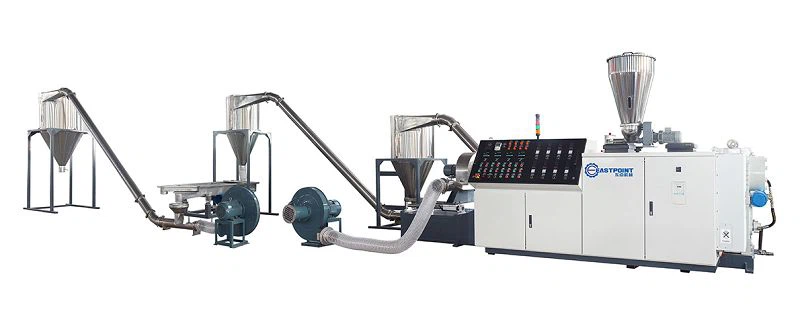
Hey there! As a supplier of PE Pipe Winders, I know how crucial it is to select the right motor for these machines. A well - chosen motor can make a huge difference in the performance, efficiency, and longevity of your PE Pipe Winder. In this blog post, I'm gonna walk you through the key factors you need to consider when picking the right motor for your winder.
Power Requirements
The first thing you gotta think about is the power requirements. The power of the motor is directly related to the size and weight of the PE pipes you're planning to wind. If you're dealing with large - diameter and heavy pipes, you'll need a motor with higher power. For example, if you're using a Pipe Winding Machine to wind thick PE pipes, a low - power motor will struggle to handle the load, leading to slower winding speeds and potential motor damage.
On the other hand, if you choose a motor with too much power for small - sized pipes, you're just wasting energy and money. You can calculate the power requirements based on the torque needed to rotate the winding spool and the speed at which you want to wind the pipes. Usually, the manufacturer of your PE Pipe Winder can provide some guidelines on the appropriate power range for different pipe sizes.
Speed and Torque
Speed and torque are two important characteristics of a motor. Speed refers to how fast the motor can rotate, while torque is the force that the motor can apply to turn the winding spool. In a PE pipe winder, you need a motor that can provide the right balance of speed and torque.
For high - speed winding operations, you'll need a motor with high rotational speed. But keep in mind that high - speed motors may not have enough torque to handle heavy pipes. So, if you're winding large and heavy PE pipes, you might need a motor with high torque, even if it means sacrificing a bit of speed.
Some modern motors come with variable speed and torque control. This is really handy because you can adjust the motor's performance according to the specific requirements of each winding job. For instance, you can increase the torque when starting to wind a thick pipe and then switch to a higher speed once the pipe is on the spool.
Motor Type
There are several types of motors available in the market, and each has its own advantages and disadvantages.
AC Motors
AC motors are widely used in PE pipe winders because they're relatively simple, reliable, and cost - effective. They come in different sizes and power ratings, so you can easily find one that suits your needs. AC motors can be either single - phase or three - phase. Single - phase AC motors are usually used for smaller winders or in applications where the power requirements are not very high. Three - phase AC motors, on the other hand, are more powerful and efficient, making them a great choice for large - scale Plastic Pipe Winder operations.
DC Motors
DC motors offer better speed and torque control compared to AC motors. They can be easily adjusted to provide different levels of power and speed, which is very useful in PE pipe winding applications. However, DC motors are generally more expensive and require more maintenance than AC motors. They also need a DC power source, which may not be available in all locations.
Servo Motors
Servo motors are a high - performance option for PE pipe winders. They provide precise control over speed, position, and torque, which is essential for accurate winding. Servo motors can respond quickly to changes in the load, ensuring smooth and efficient operation. But they're also the most expensive type of motor, and they require specialized knowledge and equipment for installation and maintenance.
Efficiency
Motor efficiency is another important factor to consider. An efficient motor will consume less energy, which can save you a significant amount of money in the long run. Look for motors with a high efficiency rating, usually expressed as a percentage. A motor with a higher efficiency rating will convert more of the electrical energy it consumes into mechanical energy, reducing waste heat and energy costs.
When comparing different motors, pay attention to the efficiency curves. Some motors may have high efficiency at certain operating speeds and loads but lower efficiency at others. Make sure to choose a motor that has high efficiency within the range of speeds and loads that you'll be using in your PE pipe winding operations.
Environmental Considerations
The environment in which the PE pipe winder will operate also plays a role in motor selection. If the winder is located in a dusty or dirty environment, you'll need a motor that is well - protected against dust and debris. Look for motors with an IP (Ingress Protection) rating. A higher IP rating means better protection against solids and liquids.
If the winder is used in a wet or humid environment, you'll need a motor that is waterproof or moisture - resistant. Some motors come with special coatings or enclosures to protect them from moisture and corrosion.
Cost
Of course, cost is always a factor when making a purchasing decision. You need to balance the initial cost of the motor with its long - term performance and reliability. A cheaper motor may save you money upfront, but it could end up costing you more in the long run if it breaks down frequently or consumes a lot of energy.
Consider the total cost of ownership, which includes the purchase price, installation costs, energy consumption, and maintenance costs. A more expensive motor with high efficiency and reliability may be a better investment in the long run.
Compatibility
Finally, make sure the motor you choose is compatible with your PE Pipe Single Station Winder or Automatic Plastic Pipe Winding Machine. Check the motor's mounting dimensions, shaft size, and electrical connections to ensure a proper fit. You may also need to consult the manufacturer of your winder to make sure the motor is compatible with its control system.
In conclusion, selecting the right motor for your PE pipe winder is a complex decision that requires careful consideration of several factors. By taking into account the power requirements, speed and torque, motor type, efficiency, environmental conditions, cost, and compatibility, you can choose a motor that will provide optimal performance and reliability for your winding operations.


If you're still not sure which motor is right for your PE pipe winder, don't hesitate to reach out. We're here to help you make the best choice for your specific needs. Whether you're a small - scale operation or a large - scale manufacturer, we can provide you with the expertise and products to ensure your PE pipe winding process runs smoothly.