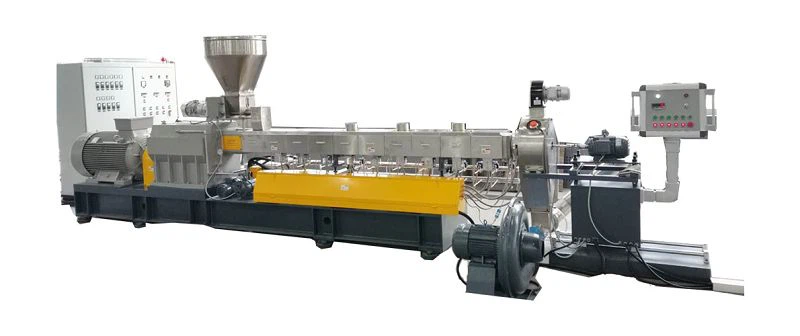
Hey there, everyone! As a supplier of WPC Extruders, I'm super stoked to chat with you about the materials these awesome machines can process. WPC, or Wood Plastic Composite, is a game-changer in the manufacturing world, and our extruders are at the forefront of making it all happen.
Let's start with the basics. A WPC Extruder is a piece of equipment that combines wood fibers or flour with thermoplastic polymers to create a composite material with unique properties. This process involves melting the plastic and mixing it with the wood component under high pressure and temperature, then shaping the mixture through a die to form various profiles.
Wood Components
One of the key materials that a WPC Extruder can process is wood fibers or flour. These can come from a variety of sources, such as sawdust, wood chips, or recycled wood. Using wood in the composite offers several benefits. It gives the final product a natural look and feel, which is highly desirable in many applications like decking, fencing, and furniture. Wood also adds strength and stiffness to the composite, making it more durable.
The type of wood used can vary depending on the availability and the specific requirements of the end product. Hardwoods like oak and maple are known for their strength and density, while softwoods like pine and fir are more lightweight and easier to process. Recycled wood is also a popular choice as it's an environmentally friendly option that helps reduce waste.
Thermoplastic Polymers
The other major component in WPC is the thermoplastic polymer. There are several types of polymers that can be used in a WPC Extruder, each with its own set of properties.
Polyethylene (PE)
PE is one of the most commonly used polymers in WPC production. It's available in different densities, such as high-density polyethylene (HDPE) and low-density polyethylene (LDPE). HDPE is known for its high strength, stiffness, and chemical resistance, making it ideal for applications that require durability, like outdoor decking. LDPE, on the other hand, is more flexible and has better impact resistance, which is useful in products like flexible pipes and some types of moldings.
Polypropylene (PP)
PP is another popular polymer for WPC. It has a high melting point, good chemical resistance, and excellent fatigue resistance. This makes it suitable for products that need to withstand repeated stress, such as automotive parts and some industrial applications. Our PP Profile Extrusion Line can be used in conjunction with the WPC Extruder to create high - quality PP - based profiles.
Polyvinyl Chloride (PVC)
PVC is a versatile polymer that offers a good balance of strength, flexibility, and cost - effectiveness. It's widely used in construction applications, such as window frames and door frames. Our PVC Window Extruder and PVC Door Frame Extrusion Line are designed to work with PVC in combination with wood fibers to create high - performance WPC products. PVC - based WPC has good weatherability and can be easily colored and textured to match different design requirements.
Additives
In addition to wood fibers and polymers, additives are often used in WPC production to enhance the properties of the final product. These can include:
Coupling Agents
Coupling agents are used to improve the adhesion between the wood fibers and the polymer matrix. They help to create a stronger bond, which in turn improves the mechanical properties of the WPC, such as its strength and impact resistance.
Stabilizers
Stabilizers are important for protecting the WPC from degradation due to heat, light, and oxidation. They help to maintain the integrity of the material over time, especially in outdoor applications where the product is exposed to harsh environmental conditions.
Lubricants
Lubricants are added to improve the flow of the molten material during the extrusion process. They reduce friction between the polymer and the wood fibers, as well as between the material and the extruder components, making the extrusion process more efficient and reducing wear and tear on the equipment.
Applications of WPC Materials Processed by Our Extruders
The materials processed by our WPC Extruders can be used in a wide range of applications.
Building and Construction
WPC is a popular choice for building and construction due to its durability, low maintenance, and natural appearance. It can be used for decking, fencing, siding, and window and door frames. Our WPC Door Frame Extrusion Line is specifically designed to produce high - quality door frames that are both strong and aesthetically pleasing.
Furniture
WPC can also be used to make furniture. It offers the look of wood with the added benefits of being more resistant to moisture, insects, and rot. This makes it a great option for outdoor furniture, as well as indoor pieces that need to withstand heavy use.
Automotive
In the automotive industry, WPC can be used for interior trim, door panels, and other components. Its lightweight nature and good mechanical properties make it an attractive alternative to traditional materials.


Why Choose Our WPC Extruders
We take pride in our WPC Extruders because they are designed with the latest technology to ensure high - quality production. Our machines are highly efficient, with precise temperature and pressure control, which allows for consistent processing of different materials. We also offer a comprehensive Wood Plastic Composite Production Line that includes all the necessary equipment for WPC production, from raw material handling to final product finishing.
If you're in the market for a WPC Extruder or are interested in learning more about the materials it can process, don't hesitate to get in touch. We're here to answer all your questions and help you find the best solution for your production needs. Whether you're a small - scale manufacturer or a large industrial company, we have the expertise and equipment to support you.
So, if you're ready to take your WPC production to the next level, reach out to us for a chat. We look forward to working with you and helping you create amazing WPC products!