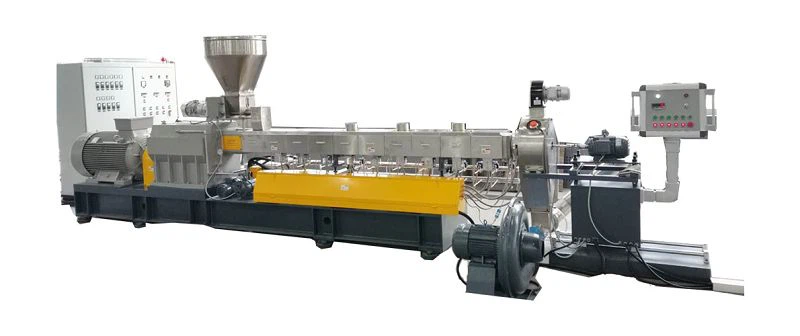
Setting the appropriate drying temperature and time for the dryer in a WPC (Wood - Plastic Composite) extruder is a crucial step that can significantly impact the quality and performance of the final WPC products. As a WPC extruder supplier with extensive experience in the industry, I am here to share some scientific and practical insights on this topic.
Understanding the Importance of Drying in WPC Extrusion
WPC materials are a combination of wood fibers and plastic polymers. Wood fibers have a natural tendency to absorb moisture from the environment. When these moisture - laden wood fibers are used in the extrusion process without proper drying, several issues can arise. Moisture can cause steam bubbles to form during extrusion, leading to surface defects, reduced mechanical strength, and poor dimensional stability of the WPC products. Therefore, effective drying is essential to remove excess moisture and ensure the smooth operation of the extrusion process and the high - quality of the end - products.
Factors Affecting Drying Temperature and Time
1. Moisture Content of the Raw Materials
The initial moisture content of the wood fibers and plastic resins used in WPC production is a primary factor. Higher moisture content requires longer drying times and potentially higher temperatures. For example, if the wood fibers have a moisture content of around 15% - 20%, more intensive drying will be needed compared to fibers with a moisture content of 5% - 10%.
2. Type of Wood Fibers
Different types of wood fibers have different moisture - holding capacities. Hardwood fibers generally hold more moisture than softwood fibers. For instance, oak fibers may require a slightly different drying regime compared to pine fibers due to their different cellular structures and chemical compositions.


3. Plastic Resin Properties
The type of plastic resin used in the WPC also plays a role. Some plastics are more sensitive to high temperatures, and excessive drying temperatures can cause degradation or changes in their properties. For example, polyvinyl chloride (PVC) has a relatively low thermal stability compared to polyethylene (PE) or polypropylene (PP).
4. Particle Size of the Raw Materials
Smaller particle sizes of wood fibers have a larger surface area, which can lead to faster moisture evaporation. However, they may also be more prone to agglomeration during the drying process. Larger particles may take longer to dry but are less likely to clump together.
Guidelines for Setting Drying Temperature
1. For Wood Fibers
The drying temperature for wood fibers typically ranges from 80°C to 120°C. At temperatures below 80°C, the drying process will be very slow, and it may not be effective in removing all the moisture. On the other hand, temperatures above 120°C can cause the wood fibers to char or degrade, which can negatively affect the quality of the WPC. For most common wood fibers used in WPC production, a temperature of around 100°C - 110°C is often a good starting point.
2. Considering the Plastic Resin
When drying the combined WPC raw materials (wood fibers and plastic resin), the temperature should be carefully selected based on the plastic's thermal stability. For PVC - based WPCs, the drying temperature should generally not exceed 80°C - 90°C to avoid PVC degradation. For PE and PP - based WPCs, slightly higher temperatures in the range of 100°C - 120°C can be used.
3. Gradual Temperature Increase
It is advisable to use a gradual temperature increase during the drying process. This helps to prevent sudden moisture evaporation, which can cause surface cracking or uneven drying. Start with a lower temperature, around 60°C - 70°C, for the first 10 - 15 minutes, and then gradually increase the temperature to the desired level.
Determining the Drying Time
1. Initial Testing
The best way to determine the appropriate drying time is through initial testing. Take a sample of the raw materials and dry them at a selected temperature. Periodically check the moisture content using a moisture meter. The drying time is considered sufficient when the moisture content reaches the desired level, which is typically around 1% - 3% for WPC production.
2. General Time Ranges
Based on our experience, for a batch of WPC raw materials with a normal moisture content (around 10% - 15%) and using a temperature of 100°C - 110°C, the drying time can range from 2 to 4 hours. However, if the initial moisture content is higher or the particle size is larger, the drying time may need to be extended.
Monitoring and Adjusting the Drying Process
1. Moisture Monitoring
Regularly monitor the moisture content of the raw materials during the drying process. This can be done using a reliable moisture meter. If the moisture content is still too high after the expected drying time, either increase the drying time or slightly raise the temperature (within the safe range).
2. Visual Inspection
Visually inspect the dried raw materials. Look for signs of over - drying, such as charred wood fibers or discoloration of the plastic resin. If any such signs are observed, reduce the drying temperature or time for future batches.
Our WPC Extruder Solutions
As a WPC extruder supplier, we offer a range of high - quality extruders that are designed to work seamlessly with the proper drying processes. Our extruders are equipped with advanced control systems that can be integrated with the drying equipment to ensure a smooth and efficient production process.
In addition to our WPC extruders, we also provide other related extrusion lines, such as PVC Door Frame Extrusion Line, PVC Gutter Extruder, WPC Door Frame Extrusion Line, WPC Decking Extrusion Line, and PVC Profile Extrusion Line. These lines are engineered to meet the diverse needs of our customers and produce high - quality profile products.
Contact Us for More Information
If you are interested in our WPC extruders or other extrusion lines, or if you have any questions about setting the drying temperature and time for your WPC production, please feel free to contact us. Our team of experts is ready to provide you with detailed technical support and guidance. We are committed to helping you optimize your production process and achieve the best results in your WPC manufacturing.