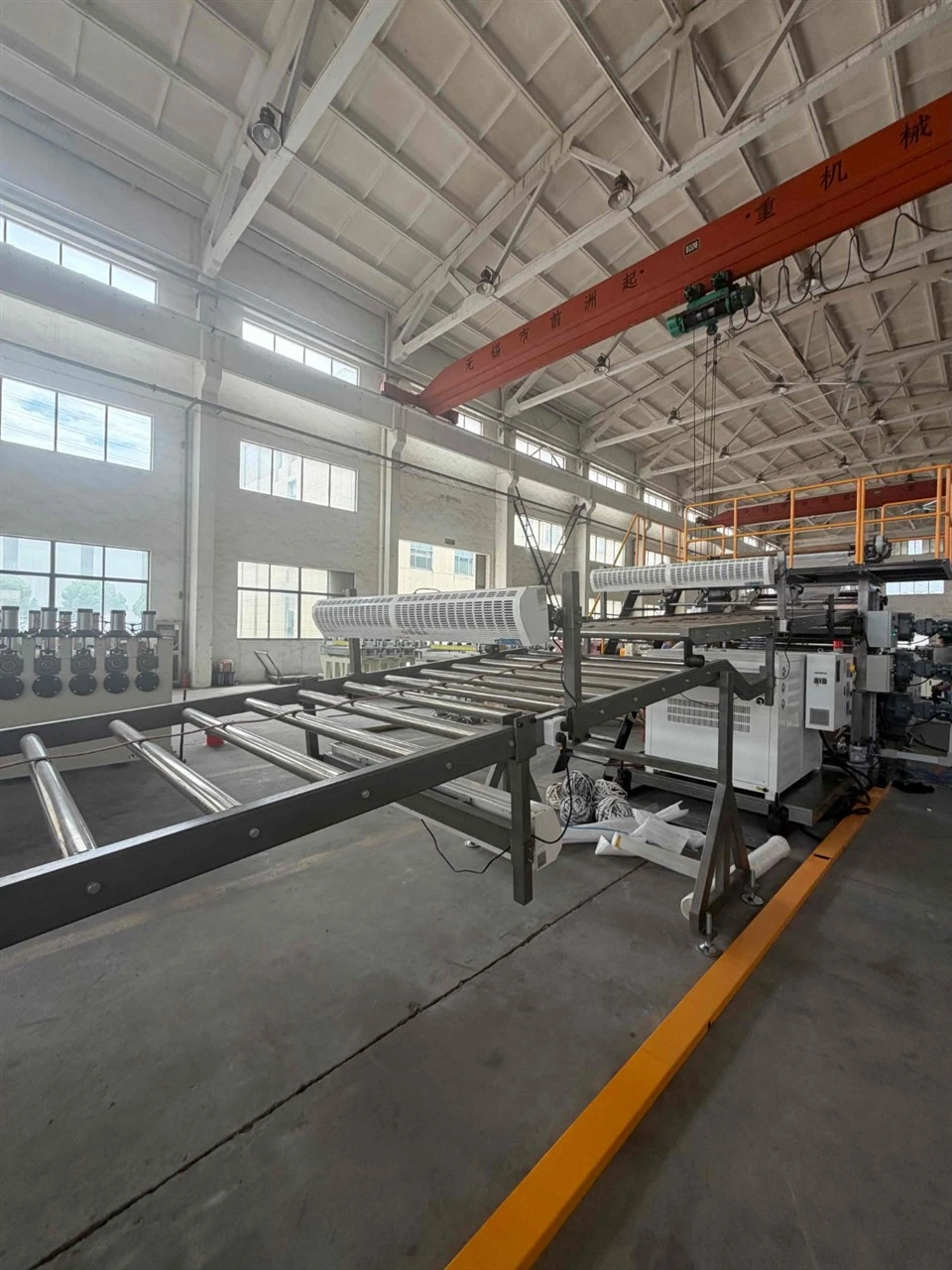
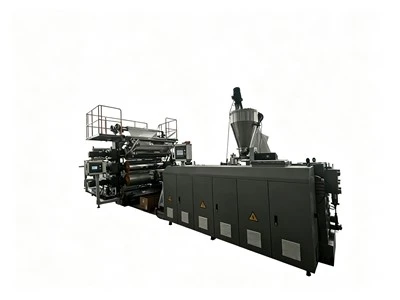
As a WPC Door Extruder supplier, one of the most common questions I get from new and existing clients is: "What kind of technical support will I actually get once I invest in equipment for wood-plastic composite door production?" It's a fair question-purchasing an extruder is a significant capital expenditure, and the last thing anyone wants is to be stuck with a machine that underperforms, breaks down unexpectedly, or fails to meet the specific demands of door manufacturing. Over the past decade, I've watched our clients grow from small-scale fabricators to large production facilities, and I've learned that the technical support we provide isn't just a "nice-to-have"-it's the difference between a profitable investment and a costly headache.
Let's break down the technical support we offer, how it's tailored to WPC (wood-plastic composite) door extrusion, and why it's non-negotiable for anyone entering or scaling in this market. Unlike PVC extrusion lines (which work with rigid PVC instead of wood-plastic blends), WPC door production has unique challenges: maintaining consistent material density, avoiding warping during cooling, and ensuring the surface finish is smooth enough for subsequent lamination or painting. That's why our support team is specialized in WPC processes, not just generic extrusion maintenance.
The first, and arguably most critical, support phase starts even before the equipment is installed. Many buyers come to us thinking "any extruder will work for doors," but WPC door formulations are very different from those used for flooring (see our PVC Flooring Extrusion Line links, which are for PVC, not WPC, by the way) or wall panels. Our pre-sales technical team works with clients to adjust screw design, barrel temperature profiles, and material feed systems specifically for WPC blends. For example, a client might initially bring a formula with 60% wood flour, but our team will test it to find the optimal ratio-usually 55-65% wood, 35-45% PVC resin, plus stabilizers and coupling agents-to ensure the extruder can produce a door panel with the right structural rigidity. This isn't generic advice; it's hands-on testing with our own WPC Panel Extruder prototypes, because we know that a suboptimal formula will lead to frequent jams or inconsistent door dimensions.
Once the equipment is manufactured and shipped, our on-site installation support is next. We don't just drop off the machine and leave-our certified technicians travel to the client's factory to oversee every step: from rigging the extruder into position, to connecting the cooling system, the haul-off unit, and the cutting machine. For clients who are switching from PVC door production (see our PVC Door Extruder page for that line of equipment), our team will explain the key differences between PVC and WPC door setups. For instance, WPC panels require a slower extrusion speed and longer cooling time than PVC, so our technicians will adjust the line's puller speed and cooling channel length on-site. We also train the client's operators during installation-this isn't a short 30-minute tutorial; it's a 2-3 day session where they learn how to troubleshoot common startup issues, like material bridging in the hopper or uneven melting in the barrel.
After the machine is up and running, our remote support team is available 24/7 for urgent issues. WPC extrusion has unique failure points: wood particles can sometimes clog the screen changer, leading to pressure drops that ruin a batch of panels. Our technicians can access the machine's control system remotely to adjust pressure settings, suggest a screen change schedule, or guide operators through cleaning the extruder's screw. We also use a cloud-based monitoring tool for all our supplied lines-this lets us track performance metrics like barrel temperature, screw speed, and material output in real time. Last year, a client in Eastern Europe called us at 2 a.m. local time because their extruder was producing warped door panels. Our remote team checked the cooling system's water flow rates and found that a filter was blocked; we walked the client's maintenance crew through flushing the filter, and they were back to production within an hour. Without that remote support, they would have lost a full day's order for local door installers.
Preventive maintenance support is another key part of our offering. We don't just wait for a machine to break-we provide clients with a customized maintenance checklist based on their production volume. For a client running 8 hours a day, 5 days a week, that means monthly checks of the screw's wear, the barrel's temperature sensors, and the haul-off's alignment. We also offer annual on-site maintenance visits, where our technicians can replace worn parts (like the die head liner or the screw's mixing elements) before they cause a shutdown. This is especially important for WPC extruders, since wood-based materials are more abrasive than pure PVC, leading to faster wear on internal components. A client in South America once skipped our annual maintenance for a year, and their screw wore out so much that the door panels had inconsistent density; by the time they called us, they had to halt production for three days and spend twice the cost of a maintenance visit to replace the screw. Since then, they've been a repeat customer because they understand the value of preventive support.
We also provide ongoing process optimization support as clients scale their production. As a WPC door extruder supplier, we know that initial production is often a trial-and-error phase. For example, a new client might start with a small line and produce 1,000 doors a month, then decide to expand to a PVC Door Panel Production Line (see our PVC Door Panel Production Line link for that expansion). Our technical team will help them integrate their existing WPC extruder with the new PVC line, adjust material handling systems, and train their team to run both lines efficiently. We also share industry insights-like the latest WPC additives that reduce warping or improve surface finish-based on data from dozens of our global clients. Last year, a client in India asked us to help them increase their door production by 30%; our team worked with them to upgrade their extruder's motor and adjust the screw's geometry, which let them boost output without sacrificing door quality.
Training doesn't stop after installation either. We host quarterly virtual training sessions for operators, maintenance crews, and production managers. These sessions cover topics like WPC material formulation, troubleshooting common defects (like blisters on door surfaces or dimensional instability), and safety protocols for working with extruders. We also offer in-person training at our factory, where clients can practice operating our WPC Panel Extruder with different formulations, so they're comfortable handling issues before they go back to their own factory. One of our clients from Vietnam told us that their in-person training helped them reduce material waste by 15% in the first six months of production, because they learned how to adjust temperature profiles to avoid wasting faulty panels.
Another often-overlooked support service is spare parts access. WPC extruders have specific parts that aren't universal-like the die head designed for WPC door profiles or the mixing segments for the screw. As a supplier, we maintain a global inventory of spare parts, so clients can get replacement parts within 3-5 business days, no matter where they are. For critical parts like the screw or barrel, we also offer expedited shipping for emergency replacements. This is a big difference from cheaper extruder suppliers that force clients to wait weeks for parts, which can halt production for days. We've also partnered with local service centers in North America, Europe, and Asia, so clients can get on-site part replacement faster if needed.
We also offer custom design support for clients who need unique door profiles. Not all doors are the same-some clients make interior doors with decorative grooves, others make exterior doors with thicker frames. Our technical team works with clients to design custom die heads that fit their extruder, so they don't have to buy a whole new machine to produce different door styles. This is a huge cost-saver for small to medium-sized fabricators who want to offer a range of products. For example, a client in Australia wanted to add a line of fire-resistant WPC doors; our team adjusted the die head and provided a modified material formulation, so they could launch the new product without investing in additional equipment.
Now, I know some might ask: "How is this different from other extrusion suppliers?" Let's be honest-many suppliers will sell you a machine and throw a manual at you, but WPC door extrusion is a specialized field. PVC extrusion (whether for flooring, as in PVC Flooring Extrusion Line, or walls, as in PVC Wall Panel Production Line) is more straightforward, but WPC has its own set of challenges. Our support is rooted in hands-on experience with WPC processes-we've worked with wood-plastic blends in over 50 countries, so we understand the regional variations in materials, labor, and regulations. That means we can tailor our support to a client's specific needs, whether they're in a region with limited access to technical talent, or they need to comply with local standards for door durability.
For anyone considering investing in a WPC door extruder, the technical support isn't just a "perk"-it's a core part of the investment. A machine without proper support can become a paperweight, but with the right support, it can become a reliable asset that helps you grow your business. We've seen clients who went from producing 500 doors a month to 5,000 doors a year, all because they had the technical guidance to scale effectively. We've also helped clients fix issues that other suppliers couldn't, because our team specializes in WPC, not just generic extrusion.
If you're ready to explore how our technical support can help you succeed with WPC door production, we're here to guide you through every step-from initial consultation to ongoing optimization. We don't just sell machines; we partner with our clients to ensure their equipment runs smoothly, their products meet quality standards, and their business grows. Don't let a lack of technical support hold you back from entering the WPC door market-reach out to our team today to learn more about how we can support your operations.