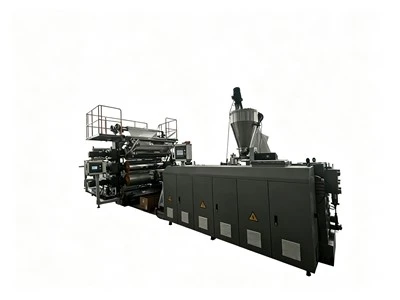
If you're running or working with WPC extrusion lines, you know recycling isn't just a buzzword-it's a make-or-break part of keeping operations profitable, cutting waste, and meeting tighter sustainability rules. As someone who's spent years fine-tuning WPC Extruder performance for customers across the construction and decking spaces, I've seen firsthand how even small tweaks to your process and equipment can boost recycling rates without sacrificing product quality. Whether you're chipping scrap decking, regrinding offcuts from door frames, or reprocessing purge from your line, let's break down what actually works (and what doesn't) to level up your recycling game.
First, let's get one thing straight: WPC (wood plastic composite) is unique when it comes to recycling. It's a mix of plastic (usually PP, PE, or PVC) and wood flour or fiber, so if you mess up the reprocessing steps, you end up with clumpy blends, inconsistent color, or weak finished parts. I've had customers come to me frustrated because they tried tossing all their scrap into the hopper and watched their WPC Decking Extrusion Line sputter and produce garbage. The fix starts way before the material even hits the extruder.
Sorting Your Scrap Like Your Business Depends On It (Because It Does)
I know sorting extra work, but if you skip this, you're wasting half your recycling potential. Here's the thing: WPC scrap from decking isn't the same as WPC from door frames. The wood flour content, plastic type, and even additives (like UV stabilizers for decking vs. impact modifiers for door frames) are different. If you mix them, you'll get uneven melt flow, which means either you have to slow down production or the final product fails inspections. Also, avoid mixing in non-WPC materials-PVC bits from old pipes, metal from trim, even leftover paper from packaging will wreck your screw and die.
Pro tip I've shared with dozens of customers: set up three simple sorting bins right at your extrusion line. One for clean WPC scrap (offcuts, end caps, trimmings that haven't touched any other materials), one for contaminated WPC (scrap with paint, adhesive, or dirt), and one for non-recyclable waste. For door frame scrap specifically, since it's often thicker and has higher wood content, you can even repurpose that separately if you don't need to blend it with decking material. If you run WPC Door Frame Extruder lines, this separation pays off big time because door frames have stricter strength requirements-you can't afford compromised material.
Another small win here: label every bin clearly so no one accidentally tosses the wrong thing. I've seen lines where a new operator dumped PVC trim scraps into WPC scrap and shut down the extruder for 8 hours to fix a clogged screw. Don't let that be you.
Prepping Your Recycled Material The Right Way (No, Grinding It Up Isn't Enough)
Once your scrap is sorted, you need to process it before it goes into the WPC Extruder. Grinding is standard, but here's where most people go wrong: grinding scrap too fine or too coarse. If it's too fine, the wood fiber and plastic can separate during reprocessing, leading to poor dispersion. If it's too coarse, it doesn't melt evenly, so you get lumps in the final product. The sweet spot is usually 3-5mm particles-big enough to keep the wood and plastic mixed, small enough to feed smoothly into the hopper.
After grinding, don't skip the screening step. Use a vibratory screen to filter out any oversized particles or foreign bits that slipped through sorting. I also recommend a light washing step for scrap that's been sitting around (like outdoor decking trimmings that got exposed to dirt or rain). Even a quick wash with mild soap and water, followed by drying, removes surface grime that would leave spots on your finished decking or door frames.
Drying is non-negotiable, too. Wood fiber holds moisture like a sponge, and if you feed wet material into the extruder, you'll get steam bubbles in the melt, which cause voids in the product. That's a quick way to reject a whole batch. I suggest a rotary dryer set to 80-100°C for 2-4 hours-enough to get moisture levels below 0.5%. I've seen customers skip drying and have 10% of their line output rejected for voids; adding that step cuts that waste way down.
Tuning Your Extruder Settings For Recycled Material (It's Not The Same As Virgin)
Here's the part that makes or breaks recycling performance: adjusting your WPC Extruder settings specifically for recycled material, not the virgin blend you use for new production. Virgin WPC blends have consistent particle size and plastic molecular weight, but recycled material can have degraded plastic (from previous heating cycles) and slightly different particle distribution.
First, screw speed. Most people run virgin at 30-50 RPM, but for recycled material, drop that to 20-35 RPM. Slower speed gives the material more time to melt and mix evenly, which prevents those clumps I mentioned earlier. If you run the same speed as virgin, you'll get inconsistent melt temperature, leading to poor product finish.
Next, temperature zones. Virgin blends usually have a linear temp profile (hopper: 160°C, barrel 1: 170°C, barrel 2: 180°C, die: 185°C). For recycled, you need to tweak this: lower the hopper temp to 150°C (to prevent material from melting and bridging in the feed throat) and bump up the final barrel zone by 5-10°C (to make up for the degraded plastic which is harder to melt). The die temp should stay similar, but keep an eye on it-recycled material might require a bit more heat to flow through smoothly.
Melt pressure is another key metric. Use a pressure sensor on your extruder barrel-ideal pressure for recycled WPC is 150-200 bar. If pressure is too low, mixing is bad; too high, you're wasting energy and wearing out the screw faster. When I train customers on our WPC Decking Extrusion Line, we start with these pressure ranges and adjust based on their specific scrap mix, since different wood/plastic ratios will change pressure needs.
If you also run non-WPC lines, like PVC Door Frame Production Line, you might be tempted to use recycled PVC, but that's a whole other ballgame. The same recycling logic applies-sorting, grinding, drying-but PVC has a narrower melt window, so you have to adjust temps more carefully. But if you're sticking to WPC, these settings work for most blends.
Upgrading Your Equipment (Small Upgrades, Big Recycling Gains)
You don't need to replace your entire line to improve recycling performance-small equipment tweaks go a long way. First, look at your screw: standard screws for virgin material might not have enough mixing elements for recycled blends. Adding a mixing section (like a Maddock or pineapple mixing tip) will break down those clumps and improve dispersion of wood and plastic. I've retrofitted dozens of customer WPC Extruder screws with these mixing sections, and they saw a 15-20% drop in scrap from recycled material.
Next, the screen changer. If you're using a manual screen changer, you're probably wasting time and quality when you change screens. A continuous hydraulic screen changer lets you swap screens without stopping the line, which means you can filter out more fine particles and contaminants without downtime. For lines that run high volumes, like the WPC Decking Extrusion Line, this is a no-brainer-less downtime = more recycled material processed, less waste from line stops.
If you're producing door frames, which are thicker and require more uniform material, upgrading to a gear pump can also help. Gear pumps stabilize melt pressure, so even with inconsistent recycled material, your die output stays consistent, leading to fewer rejects. It's a small investment that pays off quickly in lower scrap rates.
Maintaining Consistency Across Your Entire Process
Even with the best sorting and settings, if you have inconsistent operator habits, your recycling rates will suffer. I tell every customer I work with that training is key-make sure every operator knows the difference between scrap bins, how to check moisture levels, and how to adjust extruder settings for recycled material. I've had a customer where one operator would grind scrap extra fine and another would grind it coarse, leading to a 10% difference in waste rates. Training fixed that overnight.
Also, track your data. Log how much recycled material you process each week, how much scrap you generate, and what settings you used. You'll start to see patterns-like when you use 100% recycled material from decking, your melt pressure is 170 bar, but when you mix in door frame scrap, it's 190 bar. That data lets you fine-tune settings over time, making your process more efficient.
Common Mistakes To Avoid (I've Seen Them All)
Let's wrap up with the mistakes that keep people from hitting their recycling goals. First, don't use 100% recycled material for high-stakes parts without testing. If you're making load-bearing door frames, mixing too much recycled material (more than 30-40%) can drop strength. Test small batches first to make sure it meets your specs. Second, don't skip the pelletizing step if you're recycling large volumes. Pelletizing your recycled WPC (after grinding and drying) creates uniform pellets that feed into the extruder way smoother than ground scrap. I know it's an extra step, but it cuts down on feeding issues and waste. Third, don't forget about die maintenance. Recycled material can have more contaminants that build up on the die, leading to uneven product shape. Clean your die every time you switch scrap types, and inspect it regularly to prevent clogs.


At the end of the day, improving WPC extruder recycling performance isn't about one big change-it's about small, consistent tweaks to sorting, prepping, settings, and equipment. If you're looking to dial in your process and get the most out of your scrap, don't hesitate to reach out for a custom chat about your line (whether it's a WPC Decking Extrusion Line, WPC Door Frame Extruder, or PVC Profile Extruder). We work with producers every day to tailor solutions that boost recycling rates without cutting corners on quality.