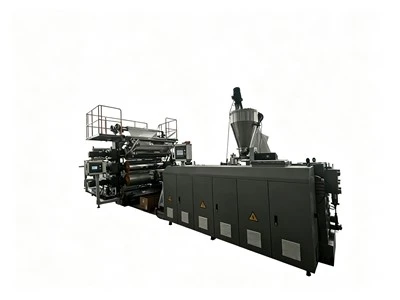
If you're in the market for a pipe extrusion line-whether you're making pressure pipes for municipal water, drainage for construction, cable conduits, or even specialty square columns-you know that quality control (QC) isn't just a buzzword. It's what keeps your line running smoothly, cuts waste, and ensures your products meet industry standards every single time. As a pipe extrusion line supplier, I've worked with hundreds of teams that started off skipping small QC steps, only to deal with costly rejects, production delays, and even customer complaints down the line. So let's break down the actual, actionable QC measures we implement for every line we sell, plus a few tips we've picked up over years of troubleshooting.
First off, we can't talk QC without tying it to specific line types, because QC looks a little different depending on what you're extruding. For example, if you're making square columns for structural applications, you'll need different checks than if you're making thin-walled drainage pipe. If you haven't already, check out our PE Square Column Line to see how we tailor QC workflows for that specific product. For pipes, the materials (PE, PVC, HDPE) and end uses drive nearly every QC step, so let's start at the very beginning-raw material inspection, because bad raw material is the number one hidden cause of pipe defects.
Raw material QC sounds basic, but you'd be surprised how many teams skip this and end up with messy batches. When a raw resin pellet comes into your facility, it might have contaminants, wrong density, or leftover additives from a bad batch, and that will mess with your extrusion process before you even heat anything up. Here's what we build into every line: first, visual sorting-we add in-line magnets and metal detectors that catch any stray metal shavings from resin processing equipment, which can cause holes or weak spots in the pipe. For resins like HDPE, we also test the melt flow rate (MFR) right from the hopper. MFR tells you how easily the resin flows when heated; if it's too high or too low, your pipe walls will be too thin or uneven. We even make sure that for lines like the HDPE Water Pipe Extrusion Line, we test the resin's density because HDPE for potable water has strict ASTM standards-you can't just use any old HDPE scrap. We also check moisture content for PVC resin, because wet resin will cause bubbles in the pipe walls, which is a huge no-no for pressure pipes. That's why for our PVC Pressure Pipe Extrusion Line, we include a dehumidifying dryer as part of the line, paired with automated moisture meters that alert operators if levels are too high before feeding into the extruder.
Next up is the extruder and die setup QC-this is where most of the pipe's basic shape and consistency is set. The die is the part that shapes the molten plastic into the pipe, so even a tiny misalignment or temperature difference here will cause uneven walls. We install multiple temperature sensors along the extruder barrel and die, not just one or two-for PVC lines, we have 8+ sensors across the barrel and die head because PVC is super sensitive to overheating (it can degrade and turn brown if the temperature is off). For lines making thinner products like PVC Cable Conduit Extrusion Line, we use in-line laser micrometers that check the pipe diameter and wall thickness as it exits the die, not just after it's cooled. These sensors are connected to our control system, so if the wall thickness is off by even 0.1mm, the system automatically adjusts the die gap before a whole batch gets wasted. We also do a quick check at startup to make sure the die is centered-off-center dies are the most common cause of lopsided pipe, and fixing that early saves hours of rework later.


Once the pipe exits the die, it goes through a calibration and cooling process, and this is another huge QC checkpoint. Calibration is how you set the final outer diameter and shape, so we use vacuum calibration tanks for most pipe lines. Here, we have pressure gauges that monitor the vacuum level consistently-if the vacuum is too low, the pipe will be round but slightly oversized, and if it's too high, it might collapse or get a wrinkled surface. For square columns, the calibration plate is precision-machined, and we add non-contact sensors to confirm all four sides are the same height, which is way faster than manual checks. Cooling is just as important: if the pipe cools too fast, it gets internal stress that can cause it to crack later, especially under pressure. For HDPE water pipes, we use a two-stage cooling system-first a water bath at controlled temperature, then air cooling-to minimize stress. We also check for surface defects here: no scuffs, holes, or rough spots. We use a combination of automated surface cameras (that scan the entire pipe as it's pulled) and random manual spot checks every hour. If a camera picks up a scratch, it flags the exact position so operators can fix the line setup, instead of having to pull out a whole bad pipe later.
Then comes the haul-off and cutting stage, which might seem trivial but affects final quality too. The haul-off is what pulls the pipe through the whole line at a consistent speed-if it's too fast, the pipe is stretched thin and might break under pressure; too slow, and the pipe piles up and gets damaged. We use servo-driven haul-offs, not mechanical ones, because they maintain speed within 0.5% variance, which is way more consistent. For pressure pipes, we also have length sensors that make sure cut pieces are exactly the required length-bad cuts lead to fitting issues later, which is a big customer complaint. Another thing we check here is ovality: how much the pipe's outer diameter varies around its circumference. For drainage pipes, a little ovality might not matter, but for pressure pipes, ovality beyond 2% reduces the burst strength by a lot. We include automated ovality testers on all high-pressure lines, so operators catch issues before products leave the line.
After cutting, it's time for post-extrusion testing, and this is where we separate a good pipe from a great one. We don't just rely on process data-we do actual physical tests on random samples from every production run. Let's break this down by line type, because the tests are different: for HDPE Water Pipe Extrusion Line, we test burst strength, hydrostatic pressure, and tensile strength. Hydrostatic testing means filling a section of pipe with water, pressurizing it, and holding it for a set amount of time (like 1000 hours) to make sure it doesn't leak. For PVC Pressure Pipe Extrusion Line, we do similar hydrostatic tests, plus check for chemical resistance, since PVC is used for many drainage and pressurized non-potable lines. For our PVC Drainage Pipe Extrusion Line, we check ring stiffness-how well the pipe holds its shape under weight, because drainage pipes are buried underground and need to support soil pressure. For square columns, we test compressive strength, since they're structural, and dimensional accuracy for joining. We also do melt index testing on finished pipe material, just to confirm it matches the original raw resin specs-this catches any issues that popped up during extrusion, like overheating that changed the resin's properties.
We also include a lot of operator training as part of our QC package, because even the best line will have issues if the operator doesn't know how to use it. We teach them how to read the process data, adjust settings when sensors flag a problem, and do basic troubleshooting. For example, if a wall thickness sensor alerts them to a thin spot, we teach them to check the die temperature first, not just guess and adjust the haul-off speed. We also recommend regular line maintenance as a QC step-cleaning the extruder barrel and die every 500 production hours, checking sensor calibrations weekly, and replacing worn haul-off belts. Worn belts cause speed variance, which leads to thin pipe walls, so staying on top of small maintenance stops big QC headaches.
I've seen way too many pipe extrusion teams try to cut QC corners to save money, and it never works. They end up with high reject rates, lost customers, and even liability issues if a pipe fails under pressure. The good news is that with the right QC measures built into the line, plus a solid maintenance routine, you can keep waste low and quality consistent. If you're looking for a line that has these QC features built in, whether you need pressure pipes, drainage, conduits, or specialty columns, we've got you covered. To talk through your specific needs, just reach out for a consultation.