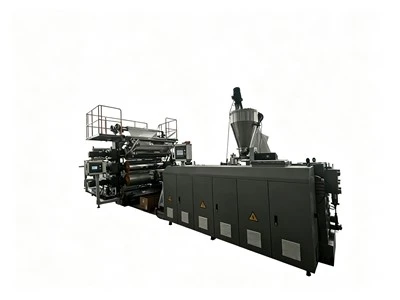
If you've ever walked into a modern home, commercial office, or outdoor patio with stylish, durable paneling that looks like real wood but stands up to rain, UV rays, and heavy foot traffic, you've likely encountered a WPC (Wood-Plastic Composite) panel. As a supplier of extrusion lines for these panels, I get asked all the time: "How does a WPC Panel Extruder actually work?" It's not just shoving wood and plastic into a machine and calling it a day-this is a precise, multi-step process that blends material science, mechanical engineering, and quality control to create panels that outperform many traditional building materials. Over the past 12 years, I've worked alongside our engineering team to refine every part of the process, and today I'm breaking it down step by step, plus sharing how our WPC Panel Extrusion Line turns raw materials into finished, ready-to-install products.
First, let's start with what WPC is, because the process only works if the material mix is right. WPC panels are typically made from a blend of thermoplastic resin (most often PVC, though some lines use HDPE or PP), wood flour (fine sawdust from hardwood or softwood, usually recycled to keep costs and environmental impact low), and additives. The additives are non-negotiable: they include UV stabilizers to prevent fading outdoors, foaming agents to cut weight without losing strength, lubricants to keep materials flowing through the extruder smoothly, and color pigments to match whatever aesthetic a customer needs. Get that mix wrong-say, not enough lubricant or too much UV stabilizer-and the final panel will warp, crack, or discolor within a year. Our team has tested hundreds of material ratios over the years, and we've tailored our lines to handle specific blends, whether a customer needs a solid panel for indoor walls or a foamed panel for outdoor decking. That flexibility is one of the reasons our WPC Panel Extrusion Line stands out-we adjust the process settings to match your material, not the other way around.
The first formal step in operation is material compounding, which happens right before the extruder itself. Compounding is where we turn individual raw materials into a uniform, pelletized mix that's easy to feed into the extruder. If you just dump wood flour and plastic resin straight into the extruder, you'll get clumps: the wood doesn't bind evenly with the plastic, leading to weak spots in the panel. Our compounding system (integrated into our full extrusion lines) uses a twin-screw compounder-two intermeshing screws that rotate in opposite directions, mixing the materials while applying controlled heat. The compounder heats the resin to its melting point (for PVC, that's around 180-200°C, for example) while the screws shear through the wood particles, dispersing them evenly throughout the molten plastic. Additives get mixed in here too, so every pellet that comes out is a consistent blend of plastic, wood, and functional chemicals. These pellets then cool in a water bath and are cut into uniform 3-5mm pellets, ready for extrusion. For customers who also make other plastic-panel products, we have add-on modules that let you adapt the line to run PVC Wall Panel runs or Foamed Panel Extrusion when needed, without major reconfiguration.
Next comes the core of the process: the single-screw extruder that gives WPC panels their shape. Wait, "single-screw"? I know, many people expect twin-screw for mixing, but WPC panels usually use a single-screw extruder with a specialized screw design-one that has different sections for feeding, compressing, and metering material. Let's walk through how that works step by step. First, the compounded pellets are fed into the feed throat of the extruder, where they drop onto the rotating screw. The screw sits inside a heated barrel, which has multiple temperature zones-we set these zones based on the resin type. For PVC, the feed zone is kept around 150°C, warm enough to soften the pellets but not melt them too early, while the compression zone heats to 190°C, where the plastic melts fully and the wood flour is kneaded into the molten mix. The metering zone, at the end of the screw, is set to a slightly lower temperature (around 185°C) to ensure the mix is uniform before it exits the die.
The screw's design is critical here: it's not just a plain metal rod. Most WPC extruder screws have varying flight depths-shallower at the end-so the material is compressed as it moves forward, removing any trapped air bubbles that would cause voids in the panel. That compression also increases pressure in the barrel, which is exactly what pushes the material through the die. Pressure sensors along the barrel feed real-time data to our line's control system, so if pressure drops, the screw speed automatically adjusts to keep material flow consistent. This is where our WPC Panel Extrusion Line really shines: our control systems are user-friendly, even for operators who are new to WPC production. You don't need a degree in engineering to adjust temperature zones or screw speed-our touchscreen interface walks you through it, with built-in alerts if something is off.
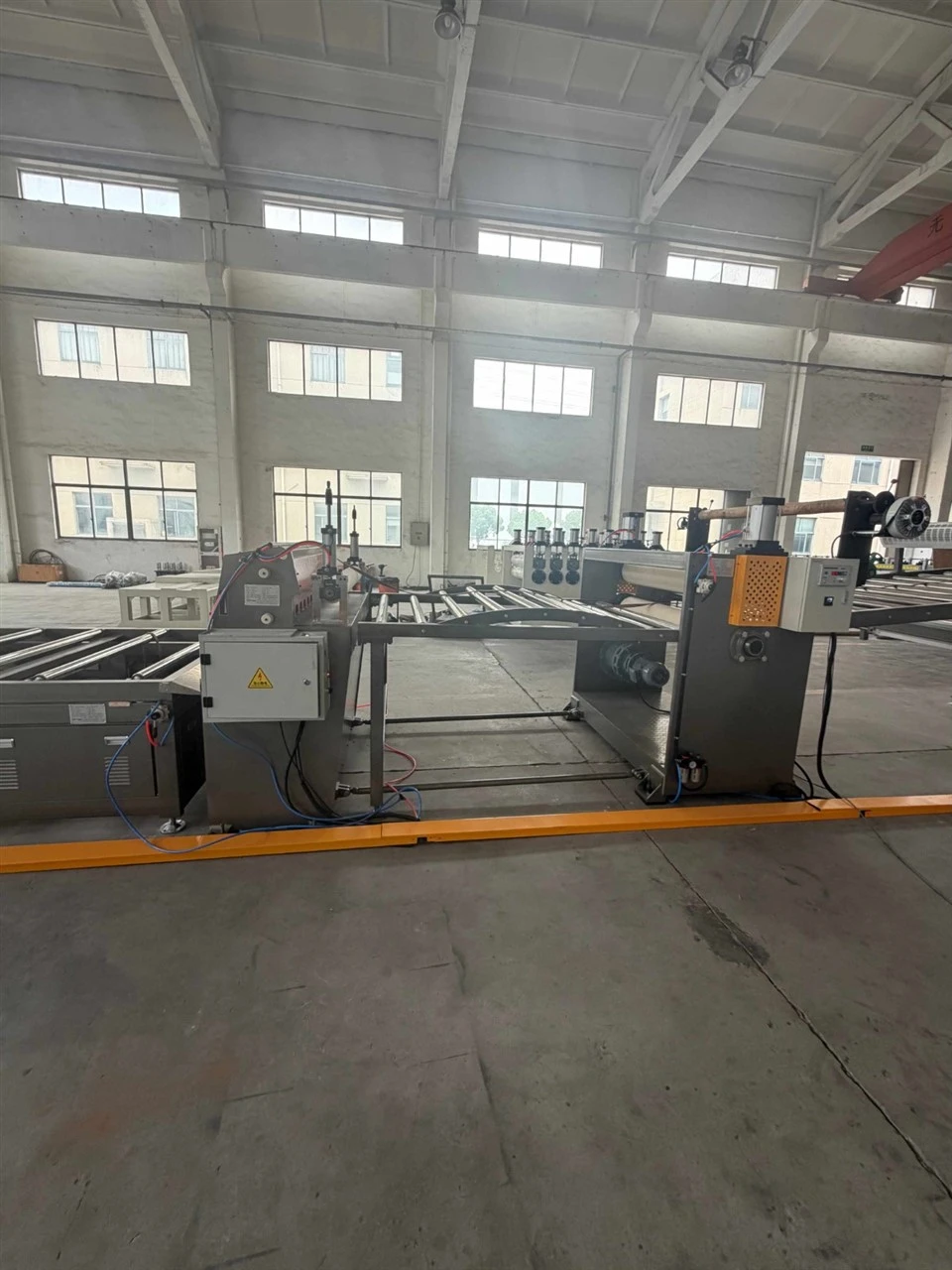

Once the molten, homogeneous WPC mix exits the extruder, it moves to the die, where the panel gets its final shape. The die is a precision-machined metal plate (usually steel or chrome-plated for durability) with a slot cut to the exact dimensions of the panel you want-say, 120mm wide, 10mm thick, with a tongue-and-groove edge for easy installation. This is a tiny step that makes a huge difference: if the die's edges are even slightly misaligned, the panel will have uneven thickness, which makes it hard to fit together. For customers who make specialized panels, we can custom-machine dies for any size or profile-from thin wall panels to thicker decking boards. Some lines also have a co-extrusion module here, which adds a thin cap layer to the panel's surface. That cap layer has extra UV stabilizers and scratch resistance, so it protects the core WPC from outdoor elements. It's why a WPC patio panel can look good for 15 years without fading, while an uncoated panel might discolor in two seasons. Our co-extrusion module is a popular add-on for customers targeting outdoor markets, and it's also compatible with our PVC Flooring Extrusion Line for those making WPC or PVC flooring with wear layers.
After exiting the die, the hot panel is still soft and needs to cool quickly to hold its shape. That's where the calibrator and cooling system come in. The calibrator is a long, water-cooled vacuum chamber that pulls the panel tight against its inner walls, locking in the exact dimensions and profile. The vacuum system applies gentle suction, so the panel doesn't warp or bend as it cools. The cooling system uses recirculated cold water (usually around 10-15°C) that runs through channels in the calibrator's walls, reducing the panel's temperature from near 200°C to room temperature in just a few meters. I've seen cheaper lines skip the calibrator or use poorly sized cooling chambers, and the result is wavy panels that have to be scrapped. That's why our line's calibrator is custom-sized to match the die profile, with adjustable water flow so you can fine-tune cooling for different panel thicknesses. For example, a thin indoor wall panel needs slower cooling to avoid cracking, while a thick outdoor deck panel can handle faster cooling for higher production speeds.
Once the panel is cool enough to be rigid, it moves to the haul-off and cutting system. The haul-off is a pair of motorized rollers that pull the panel at a consistent speed-this is key to maintaining uniform thickness and preventing stretching. If the rollers pull too fast, the panel will be too thin; too slow, and you'll get bulges. Our line's haul-off has a variable speed control, synced to the extruder's output, so speed adjusts automatically as production changes. After the haul-off, the panel is cut to length by a high-precision saw. The saw is set to the exact length the customer needs-usually 2.4m, 3m, or 3.6m for standard panels-and makes a clean, straight cut without chipping the WPC material. Some lines also have a profiling cut here, for customers who need to add the final tongue-and-groove edges, though that can also be done before cooling in some setups.
But wait-we're not done yet, because quality control is a huge part of operating a WPC extruder. Every panel that comes off the line gets inspected for defects: voids, uneven thickness, color inconsistencies, or surface scratches. Our WPC Panel Extrusion Line has built-in inspection modules that use cameras and sensors to check panels as they move along the line, and any defective pieces are automatically sorted and removed. This reduces waste and ensures that only high-quality panels reach customers. For customers who need to meet specific industry standards-like ASTM for building materials in the U.S. or CE for Europe-we can integrate testing modules that check things like impact resistance, flex strength, and UV stability right on the line. That means you don't have to send samples to an external lab; you can certify every panel as it's produced.
Now, let's talk about the difference between operating a WPC extruder and other plastic extrusion lines, because that's a common question. For example, our PVC Wall Panel Production Line uses the same basic flow, but without the wood flour in the mix. The material is 100% PVC resin, so temperature settings are slightly lower, and the screw design is adjusted for pure plastic instead of wood-plastic blend. Similarly, our Foamed Panel Extrusion Line adds a chemical foaming agent that releases gas during extrusion, creating a lightweight, air-filled core-something WPC lines can also do for outdoor panels, but the process is tweaked to keep wood and foaming agent from reacting incorrectly. Even our PVC Door Panel Extrusion Line has a different die design, since door panels need to be thicker and more rigid than wall panels. So while the core process is similar, every line is tailored to the product you're making.
Over the years, I've learned that the biggest mistake new WPC extrusion operators make is not properly maintaining the line. The screw and barrel can build up residue from wood flour and plastic over time, which causes uneven mixing and defects. We recommend a full cleaning of the extruder every 1000 operating hours, using a special cleaning compound that dissolves residue without damaging the screw. Operators should also regularly check temperature sensors, vacuum pressure in the calibrator, and saw blade sharpness-small issues here add up to big problems in panel quality. We provide on-site training for all our line operators, plus a 24/7 technical support team, so if something goes wrong, you don't have to wait days for a fix. Last year, we had a customer in Texas who had a minor issue with their extruder's pressure sensor, and our technician walked them through a replacement over a video call in 20 minutes, so they didn't lose a day of production.
If you're in the market for a WPC Panel Extrusion Line, you're probably balancing production speed, panel quality, and cost. Our line is designed to hit all three: it can produce up to 500kg of panels per hour, depending on size, with a defect rate of less than 1%. We also offer flexible configurations, so you can start with a basic line and add modules (like co-extrusion or on-board testing) as your business grows. Whether you're making indoor wall panels, outdoor decking, flooring, or door panels, our lines are adaptable. We've also seen customers use our lines for other materials, like recycled plastic, by adjusting the material mix and settings-so your line can work for multiple product lines as your market expands.
At the end of the day, operating a WPC Panel Extruder is equal parts art and science. It starts with the right material blend, precise temperature and pressure control, and careful monitoring at every step. As a supplier, our job is to make that process as easy and reliable as possible, so our customers can focus on growing their business, not troubleshooting equipment. If you're ready to learn more about how our WPC Panel Extrusion Line can fit your production needs, we encourage you to reach out to our team to discuss your specific requirements, from panel size to output capacity. We've worked with small family-run factories and large multinational brands, and we can tailor a solution that works for you.