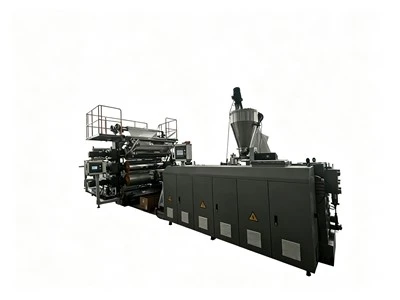
If you've ever shopped around for extruders-whether you're running a pipe plant, a profile shop, or working with WPC (wood-plastic composite) materials-you've probably stumbled on two big categories single-stage and multi-stage extruders. As an extruder supplier that's spent years talking to shop owners, production managers, and design engineers, I get that it's easy to mix these up, especially when you're juggling priorities like throughput, material quality, and budget. Most folks don't just need a textbook definition-they need to know which one will actually make their line run smoother, cut down on scrap, and fit their specific product goals.
Let's start with the basics, no overly technical jargon here. A single-stage extruder is exactly what it sounds like: one continuous, long screw that does every job. Feed material pellets go in one end, it melts them, mixes them if needed, pushes the molten resin through the die, and out the other end. That single screw has three key sections: feed (where pellets are loaded and packed), compression (where the screw channels get narrower, squeezing air out and melting the plastic), and metering (where the screw is consistent, pushing a steady, even flow to the die). This design is simple, right? Less parts, less upfront cost, and it works great for basic jobs. But here's the catch-because it's all in one screw, that means it has to pull double duty. It has to handle feeding dense pellets, melt them evenly, and maintain a precise output speed for the die. If your material's tricky-like a low-density resin that doesn't compress well, or something with filler that can cause wear-it starts to show its limits. I've had customers tell me they'd get inconsistent melt temperatures, or have to slow down production just to avoid scrap because the single screw couldn't keep up with both melting and metering evenly.
Multi-stage extruders, on the other hand, split that work into separate sections, often with two (or sometimes more) distinct screw assemblies, or even separate barrels. The biggest difference is they don't make one screw do everything. One section is dedicated to feeding and compressing pellets, another to precise melting, and a third to metering. Some multi-stage setups even let you adjust each section independently-like cranking up the heat in the melting zone without messing with how fast pellets feed, or fine-tuning flow rate separately from melt consistency. For anyone running high-volume, tight-tolerance products, this is a game-changer. But it's not just about splitting sections; many multi-stage extruders can also handle co-extrusion, where you layer different materials in one product. That's why you'll see them used for things like multi-layer pipes, or WPC products where you need a strong core and a durable outer layer.
Let's break down the key differences that matter for your shop, not just the specs. First, material flexibility. Single-stage extruders are limited to materials that melt evenly in one pass-HDPE for basic pipes, simple polyolefins, that sort of thing. If you're working with something more complex, like WPC that has wood fibers mixed in, or multi-layer pipe where you need a rigid core and a flexible outer layer, a single-stage machine will struggle to mix those evenly. That's where our Pipe Co Extrusion Machine or WPC Co Extrusion Machine come in-those are multi-stage setups specifically built for those exact use cases. We've had a pipe manufacturer tell us they switched from a single-stage to a pipe co-extrusion machine for their HDPE lines, and cut scrap by 12% because the multi-stage design let them layer a scratch-resistant outer layer without messing up the core.
Next up is throughput and consistency. Single-stage extruders have a single screw, so if demand picks up, you can only push it so far before you get uneven melting. The screw has to balance feeding, compressing, and metering all at once-push too hard on feed, and you'll get air bubbles; push too hard on metering, and the resin might not fully melt, leading to weak parts. Multi-stage extruders eliminate that juggle. You can feed pellets as fast as your hopper lets you, have a separate section fully melt and homogenize the resin, then a metering section that sends a perfect, steady stream to the die. This is why our 65/132 Conical Twin-Screw Extruder is popular for high-volume PVC profiles-it can run at 30-40% higher throughput than a comparable single-screw without sacrificing melt quality. I've seen shops that rely on single-stage machines hit a throughput ceiling at 500 lbs/hour, then jump to multi-stage and push 700-800 lbs/hour with the same team-no extra labor needed, just a better design.
Then there's wear and maintenance. Single-stage screws experience more wear because they're handling both compression and metering. If you're running abrasive materials, like filled plastics or WPC, the single screw's flights get worn down faster, leading to inconsistent output over time. Multi-stage extruders let you use harder, more wear-resistant materials for the sections that handle abrasive feeds, and keep the metering sections (which need precision) separate, so you don't have to replace the whole screw when one part wears out. That means lower long-term maintenance costs, which adds up fast for busy production lines.
But let's be real-single-stage extruders aren't bad. If you're running small batches, simple products, or working with basic materials, they're a solid, cost-effective choice. For example, if you're making small runs of basic HDPE pipe, our HDPE Single Screw Extruder fits right into that use case. It's smaller, easier to set up, and doesn't require the extra controls that come with multi-stage machines, so it's great for shops that don't have a ton of space or need to switch products quickly without a lot of setup time. The downside? You'll hit limits when you need higher volume, tighter tolerance, or more complex materials. A friend who runs a small profile shop told me they started with a single-screw HDPE extruder for their basic pipe line, but when they got a big contract for multi-layer irrigation pipe, they had to rent a multi-stage machine for the job before they invested in their own. That's a common pain point-growing out of the machine you bought because you didn't account for future needs.


Another big one is melt quality. With single-stage, the melt has to happen as the resin travels along the entire length of the screw. If there's a variation in pellet size, or the resin's moisture content is a little off, you'll get cold spots or uneven mixing. Multi-stage extruders use things like shear pins, mixing elements, and independent temperature zones in each section, so the melt is far more consistent. That's critical for products where strength or durability matters-like pressure pipes, where a weak spot from uneven melt can lead to leaks or failures down the line. Our PE Pipe Extruder can be built as a single or multi-stage, so we work with customers to pick the right one based on the pressure rating their pipes need.
Now, I know what some of you are thinking: "Multi-stage is better, so why would anyone get single-stage?" Price is the main one-upfront cost. A single-stage extruder is usually 20-30% cheaper than a comparable multi-stage model, which makes it tempting for new shops or shops with tight budgets. Also, if your line only runs one product 24/7, and that product is simple, a single-stage will do the job just fine. The problem is that flexibility-if you ever want to expand to multi-layer products, higher volume, or more abrasive materials, you're either stuck with that machine or have to upgrade, which ends up costing more in the long run.
Let's wrap this up with a quick cheat sheet to help you decide:
- Go single-stage if: You're making basic, low-tolerance products, small batches, or have a tight upfront budget. Our HDPE Single Screw Extruder is your go-to for those use cases.
- Go multi-stage if: You're running high-volume, multi-layer products (like pipe with a protective outer layer), working with composites like WPC, or need consistent, tight-tolerance parts. Our Pipe Co Extrusion Machine and WPC Co Extrusion Machine are built exactly for that, along with the 65/132 Conical Twin-Screw Extruder for high-demand profiles.
- If you're on the fence, think about your next 2-3 years: Are you planning to take on bigger contracts, add new product lines, or increase throughput? It's almost always easier to invest in a multi-stage machine upfront than to retrofit later.
At the end of the day, the "right" extruder isn't the most expensive one, or the most complex-it's the one that fits your specific production needs. If you're not sure which is best for your shop, feel free to reach out to our team to chat through your requirements. We don't push the most expensive model; we help you pick the one that'll make your line run better, no hidden fees or fine print. Don't hesitate to contact us to discuss your project and find the perfect extruder solution for your needs.