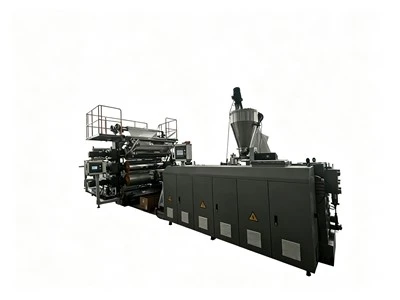
If you're running a PVC door extrusion business (or even just learning the ropes of keeping these machines alive), you know a well-maintained PVC door extruder isn't just a tool-it's your bread and butter. I've been selling extrusion lines for over a decade, and I've seen way too many guys burn out their gear because they skipped a tiny, boring maintenance step that turned into a $10k repair bill. Today I'm breaking down exactly how to keep your extruder running smooth, no fancy tech degree required.
First off, let's get one thing straight: your extruder is way less complicated than it looks. Sure, it has a big barrel, a screw that looks like a giant twisted bolt, and a die that shapes the PVC into door panels-but most issues stem from neglect, not broken parts. I'm talking about the kind of stuff you can check in 10 minutes every shift, not the 8-hour deep dives once a year (though those matter too).
Let's start with the daily stuff because this is where 90% of problems sneak in. Every single day before you fire up the machine, do a quick walkaround. First, check the barrel and screw. Wait-don't just look at them, feel them (careful, if you ran them the day before they might be hot!). You're looking for any leftover PVC residue. Even a tiny chunk of old, burnt PVC on the screw or inside the barrel can mess up the flow of new material, leading to uneven door panels. If you spot residue, use a soft brass brush (never steel-you'll scratch the barrel, which causes way more gunk to build up) to scrub it out. No need for harsh chemicals here; warm water and a little dish soap work fine, or even the leftover PVC pellets from your last run.
Next up, the die. This is the part that actually shapes your door, so it's non-negotiable to keep clean. The die has tiny, precise openings, so even a speck of PVC can throw off your door's profile-think wavy edges, uneven thickness, or a panel that doesn't fit the frame. After every run, before the die cools, run a clean piece of scrap PVC through it to push out any leftover material. If you wait until it cools, that PVC hardens like a rock and you'll have to take the die apart to clean it. I've saved so many guys from that headache by telling them this one trick. Also, check the die bolts-loose bolts = uneven pressure = warped door panels. Tighten them just enough, no need to crank them.
Now, the parts that move: lubrication. This sounds obvious, but I see so many guys using the wrong lube for their extruder. Your extruder has bearings, gears, and maybe a gearbox that needs regular oil or grease. Check your machine's manual (I know, everyone ignores these, but trust me) to see what type of lube it requires. Don't just grab any old grease from your workshop-using the wrong stuff can break down seals and cause leaks. I recommend lubricating the main gearbox every 500 operating hours, and the smaller bearings every 200. Pro tip: keep a lube log taped to the machine. Write down when you did it, what type you used, and how much. If something goes wrong later, you'll know if the lube was the issue.
Then there's the heater system. The barrel and die have heaters that keep the PVC at the right temperature to melt smoothly. If these heaters are failing, you'll get lumpy PVC, inconsistent extrusion speed, and bad door panels. Every day, check the temperature gauges-do they match the actual material temp? You can test this with a simple temp gun (super cheap, I buy mine on Amazon for $20) pointed at the barrel and die. If the gauge says 180C but the temp gun says 160C, the heater is going out. Replace bad heaters right away-don't wait, because running an extruder with uneven temps will wear out the screw way faster.
Now, let's talk about weekly checks, because daily stuff is easy, but weekly deep dives prevent big issues. First, the screw and barrel gap. Over time, the screw wears against the barrel, creating a tiny gap. If that gap gets too big, melted PVC leaks back between the screw and barrel, reducing output and wasting material. How do you check it? You can do a quick test: run the extruder at a slow speed with no material, and listen for any loud hissing or whining noises. That's air leaking from the gap. Or, if you want to get technical, measure the gap with a feeler gauge (another cheap tool). If it's more than 0.5mm, you need to adjust or replace the screw. Don't put this off-this gap grows faster than you think, and by the time you notice, you've wasted weeks of lower production.


Next, the cooling system. Your extruder and the downstream equipment (like the calibrator that shapes the door and the haul-off that pulls it) need cooling to keep the PVC from warping. If the cooling water lines get clogged with mineral build-up, the water can't flow properly, leading to uneven cooling and a door panel that twists or bends. Every week, flush the water lines with a descaling solution (you can buy it at hardware stores) to get rid of the gunk. Also, check the cooling fans-make sure the blades aren't covered in dust or plastic shavings, because that makes them work harder and can cause overheating. A clogged fan is a quick fix, but it can lead to a dead heater or even a motor if you ignore it.
While we're on downstream gear, let's not forget that your extruder only works as well as the equipment it feeds. If you're making door panels, you're probably using a line that includes a calibrator, haul-off, and cutter-like the one I sell, the PVC Door Panel Extrusion Line. Keeping all parts of that line in sync is part of maintaining your extruder. For example, if the haul-off is pulling too fast or too slow, it puts extra stress on the extruder screw and barrel, causing wear. Every week, check the alignment between the extruder die, calibrator, and haul-off. If they're even a little off, you'll get door panels that don't run straight, which means you have to toss half your production. Take 10 minutes to adjust the frames-way cheaper than reworking bad panels.
Now, monthly maintenance stuff-this is the stuff that keeps your extruder running for 10+ years instead of 2. First, the motor and drive system. These are the workhorses that power the screw, so if they fail, your whole line is down. Turn off the machine and unplug it (safety first, always!) then check the motor's vents for dust. A dusty motor overheats faster, so blow it out with compressed air (keep the can at least 6 inches away so you don't damage the coils). Also, check the drive belts that connect the motor to the screw. If they're cracked, loose, or stretched, they'll slip, leading to inconsistent screw speed. Tighten or replace them as needed-this takes 20 minutes and saves you from a motor replacement.
Another monthly task: inspect electrical connections. All the wires going to the heaters, motors, and sensors can get loose from vibration over time. Loose connections cause power fluctuations, which mess up temperature control and can even start fires. Turn off the power, open the control cabinet, and look for any wires that are wiggly or have frayed insulation. Tighten the terminal screws with a screwdriver, and if any wires are frayed, replace them immediately. I've had a customer who skipped this and had a small electrical fire that burned up a heater-cost him $5,000 in downtime and repairs. Don't be that guy.
Wait, let's talk about specific tips for different materials too, because a lot of guys mix up PVC with other plastics. If you ever switch to WPC (wood-plastic composite), make sure you deep clean the extruder thoroughly first. WPC has wood fibers that can get stuck in the barrel and screw, and if you mix them with PVC, you'll get dirty door panels that no one will buy. That's why when I sell a WPC Panel Extrusion Line, I always tell my customers to have a dedicated extruder for WPC if they do high volume. If you can only use one, run a lot of clear PVC (or a cleaning compound, which is basically resin with no additives) through the machine to flush out all WPC residue before switching back.
Also, if you're getting into other products like PVC flooring or foamed panels, the same cleaning rule applies. The Foamed Panel Extrusion Line I sell works great for PVC foam, but leaving foam residue in your extruder will mess up regular PVC door panels. Plan for a proper deep clean between runs, and you'll avoid a lot of headaches.
Now, let's get to the big stuff: when to call in a pro. You don't have to be a mechanic, so don't try to fix every issue yourself. If your extruder is making a weird grinding noise (not the normal screw hum) or the temperature gauge is spiking randomly, don't mess with it. But if you stick to the daily, weekly, monthly checks I mentioned, you'll catch most issues before they turn into emergencies. I also recommend doing a full machine inspection once a quarter by a qualified technician-someone who works with Wood Plastic Machine and extrusion gear every day, like my team. They can spot wear you'd miss, like tiny cracks in the barrel or a screw that's starting to bend, before it's too late.
Here's a common mistake I see new extrusion operators make: cutting corners on maintenance to save time. Let's do the math: if you spend 1 hour a day on maintenance, that's 250 hours a year. If you skip that, you might have a breakdown every 6 months that takes 3 days to fix and costs $15,000 in parts and lost production. That's way more than 250 hours of work. Maintenance isn't downtime-it's investing in keeping your machine running so you can make money.
Another quick tip: keep a spare parts kit on hand. The most common parts that fail are heaters, thermocouples (the small sensors that measure temperature), and drive belts. Stock these so you don't have to wait for delivery when something breaks. I always tell my customers to buy spares when they order a line-like when you get the PVC Door Panel Extrusion Line, add 2 extra heaters and thermocouples to your order. It's a small cost that saves you days of downtime.
Now, let's wrap this up with a final thought: maintaining your PVC door extruder isn't hard, but it's consistent. If you do the small stuff every day, you'll never have to deal with the big, expensive problems. If you're in the market for a new line, whether it's for regular PVC door panels, WPC, flooring, or foamed products, I've got you covered. My team has years of experience working with extrusion lines, and we can help you pick the right gear for your business, plus answer any maintenance questions you have along the way. Don't let a poorly maintained machine kill your production-reach out if you're ready to get set up with a reliable line and a maintenance plan that works for you.